
Drowning claims over 300,000 lives each year worldwide, with over 92% of the deaths occurring in low‑ and middle‑income countries. In Uganda alone, nearly 3,000 people die from drowning every year, according to government estimates, translating to roughly eight deaths per day. Many of these are people in rural, resource-constrained communities. Despite its scale, drowning remains a neglected and under-recognized public health challenge in Uganda, rarely reflected in policy attention or health system priorities.
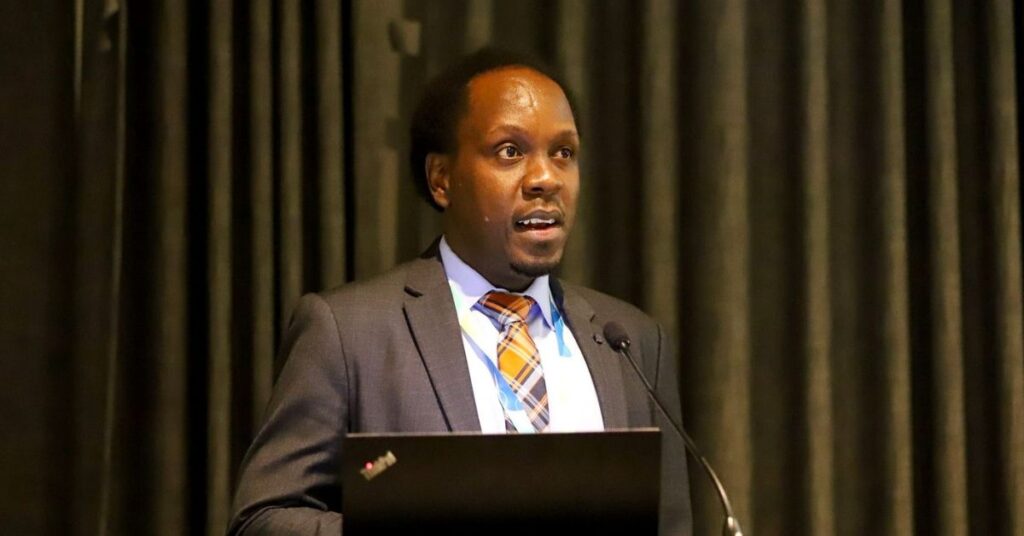
CARTA graduate Frederick Oporia, an Injury Epidemiologist, is determined to change that. Oporia is the Director of the Center for Prevention of Trauma, Injury and Disability (CTRIAD) at the Makerere University School of Public Health (MakSPH), where he strives to translate research into policy and programming. MAKSPH-CTRIAD generates the largest evidence base on injury research in Uganda, and is also currently the only one of its kind in Africa with exclusive focus on injury prevention research, with support from Bloomberg Philanthropies. Through community surveillance, data, and policy engagement, his work is contributing to saving lives and shaping drowning prevention locally and globally.
Pioneering Solutions Locally, Nationally, and Globally
At MakSPH-CTRIAD, Oporia is piloting a community surveillance system for drowning in three districts in Uganda. This pilot is believed to be the first globally to capture both fatal and non-fatal drowning cases. The system works with community health workers locally known as village health teams (VHTs) under the Uganda Ministry of Health to generate evidence for planning, advocacy, and government investment. Evidence from this pilot will be used to inform the ministry to scale up drowning surveillance by including it in the national health management information system (HMIS).
In Kalangala District, also known as Ssese islands, Oporia and team have supported refresher training of the Uganda Police Marines on safe rescue and resuscitation. This was preceded by the donation of 90 lifebuoy rings by MAKSPH-CTRIAD, adding to the 25 that Police Marines in Uganda had. These interventions directly strengthen local rescue capacity and reduce the risks of death faced by communities while undertaking economic activities within Lake Victoria.
In Mayuge District, along the eastern shores of Lake Victoria, Oporia and the MakSPH-CTRIAD team worked with communities to address persistent child drowning risks in a high-risk water source. Evidence from a country-wide survey coordinated by Oporia identified a site where more than 40 children had drowned over a 20-year period. Further analysis of the data revealed that Mayuge District records the highest drowning death rate among the districts sampled in Uganda, underscoring the severity of the burden in the area.In response, the team supported targeted, low-cost interventions of less than US$3,000 to secure the water source and reduce exposure risks. Since then, no drowning incidents have been reported at the site, marking a significant shift from a long-standing pattern of preventable deaths.
Nationally, Oporia pioneered the drafting of Uganda’s first National Strategy for Drowning Prevention linking multiple government ministries, departments and agencies such as health, water, and transport sectors in a multi-sectoral response. Globally, he serves on the World Health Organization (WHO)’s Technical Advisory Group that authored the first Global Status Report on Drowning Prevention in 2024.
He is also a member of the steering committee of WHO’s Global Alliance for Drowning Prevention, which was formed following the World Health Assembly resolution in 2023. This Alliance provides technical guidance to WHO member countries on development of strategies for drowning prevention.Further, as a member of the WHO organising committee for World Drowning Prevention Day, he contributes to shaping global awareness and advocacy efforts on drowning prevention. Through these roles, he ensures that African experiences shape international drowning prevention practices and policies, shaping global strategies and mobilizing for local action.
A Personal Passion Strengthened Through CARTA
Oporia’s commitment to drowning prevention did not begin in a lecture hall; it was driven by life experiences. As a child, he witnessed the devastating loss of a friend and neighbours to drowning. Later in life, he witnessed a fellow passenger on a ferry die because lifejackets were unavailable; and another drown to death after falling from a boat in Lake Victoria, while they were enroute to Kalangala District, Uganda. “Those moments stayed with me,” Oporia recalls. “I realized that these were not random tragedies; they were preventable deaths in a world that had simply chosen not to count them.” That realization propelled him into the field of injury prevention.
A scholarship for a Master in Public Health with a track in injury epidemiology cemented Oporia’s path in injury prevention, equipping him with the tools to frame real-world problems in scientific terms. While working on road traffic injury research, a drowning prevention study grant opened a new door. As the study Coordinator, he encountered stories and data that compelled him to pursue deeper inquiry. This led him to enroll in a PhD focused on Drowning Prevention, the first of its kind on the African continent, through the CARTA Program.
CARTA’s flexible approach allowed Oporia to define his own research topic and sharpen his analytical skills, critical thinking, and leadership capacity. “CARTA did not just build my research skills,” he says, “it taught me how to think deeply about evidence, how to lead, how to do what others fear, and how to bring others along.” Today, the training and mentorship he received are reflected in his ability to design innovative surveillance systems, lead multidisciplinary research teams, and serve confidently in global policy spaces.
Mentoring the Next Generation
Oporia is equally committed to cultivating the next generation of African researchers in injury prevention. Through MakSPH-CTRIAD, he supervises and mentors students at undergraduate, master’s, and PhD levels working across a broader injury prevention agenda that includes drowning, road safety, and emergency care.
At the master’s level, his students are advancing evidence on critical and often underexplored issues such as the links between drowning and underlying health conditions, community perceptions and myths around drowning, and child drowning risks and prevention practices in high-risk riverside communities. At the doctoral level, he is supporting emerging leaders examining complex injury challenges, including mass casualty management in hospitals across East Africa and road safety priorities such as active mobility and financing.
Beyond his direct supervision, Oporia also supports a wider network of students through scholarships, tuition assistance, and small research grants. This extended mentorship model ensures that emerging researchers across institutions can contribute to the injury prevention agenda, even beyond his immediate supervision.
Through this growing pipeline of researchers, Oporia is not only advancing knowledge but also contributing to build a sustainable community of African experts equipped to address injury prevention challenges for years to come.