
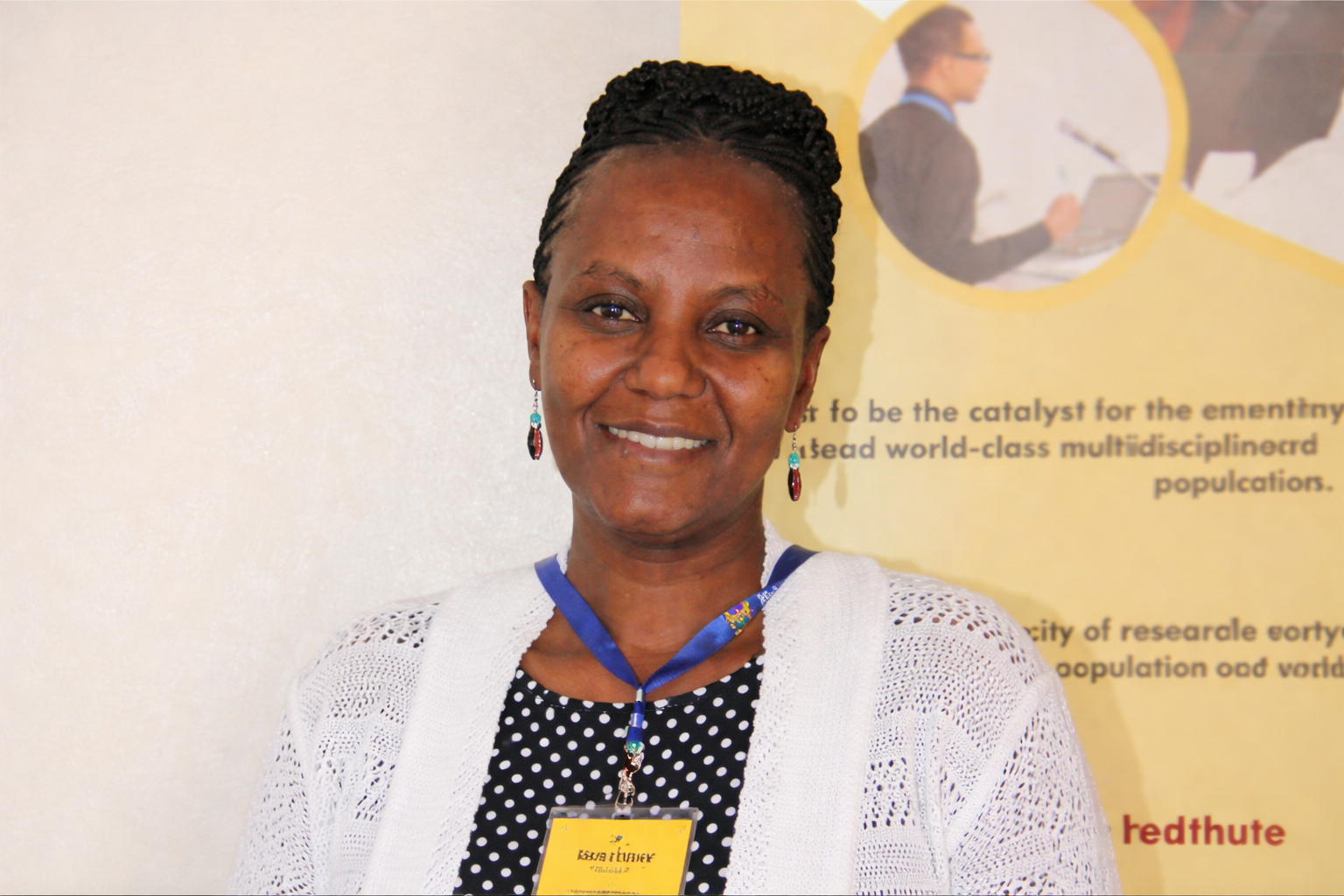
“Many young people struggle silently with mental health challenges and substance use. My work is driven by the belief that timely, evidence-based guidance can help them make healthier choices and change their life trajectories,” says Dr. Catherine Musyoka, a Clinical Psychologist and faculty member at the University of Nairobi’s Department of Psychiatry.
Alcohol and drug abuse rates are rising across Sub-Saharan Africa, including Kenya, contributing to poor health outcomes and risky behaviours among adolescents and young adults. Dr. Musyoka’s work in this field started during her CARTA-funded doctoral studies, where she focused on youth mental health and substance use prevention. Now a CARTA postdoctoral re-entry grant awardee, she is deepening and expanding this work, placing young people at the centre of prevention, education, and care through a community-based and digitally enabled approach.
Reaching Youth Through Evidence-Based Digital Care
Dr. Musyoka’s research focuses on community-based mental health interventions that provide on-demand support for alcohol and drug use prevention while improving mental health literacy among adolescents and youth aged 15 to 24. Her work targets young people living in informal settlements such as Kibera and Mukuru Kwa-Ruben in Nairobi, communities that are often underserved by formal mental health services.
As part of this work, Dr. Musyoka has developed the Youth Empowerment Digital Intervention (YEDI), a pioneering mental health and substance use support program tailored for young people in Kenya. Its approach is grounded in evidence-based cognitive behavioural therapy (CBT), offering an effective and accessible digital solution for youth facing mental health challenges. YEDI provides culturally relevant and research-backed information on mental health, alcohol, and substance use, enabling the youth to make informed decisions while addressing common challenges such as stress, anxiety, and depression.
Currently at the pilot stage, YEDI has reached approximately 5,000 young people. Participants actively engage with the platform’s learning modules and feedback mechanisms, helping to inform ongoing improvements and future scale-up. Early results, based on self-reported participant feedback, indicate reduced substance use, improved coping strategies and emotional resilience, better interpersonal relationships, and enhanced productivity and academic performance.
CARTA’s Role in Catalyzing Innovation and Impact
Dr. Musyoka is among 11 CARTA postdoctoral awardees supported in 2024, which included seven re-entry grants and four fellowships. Re-entry grants enable CARTA graduates to continue independent research at their home institutions, fostering locally led solutions and strengthening institutional research capacity. Fellowships, on the other hand, support full-time research and career development, often including international collaboration. Since 2016, CARTA has awarded 84 postdoctoral opportunities (56 re-entry grants and 28 fellowships), reflecting its commitment to maintaining a pipeline of high-quality early-career researchers through doctoral and postdoctoral support. By supporting early-career researchers in this way, CARTA helps translate doctoral and postdoctoral research into real-world interventions that address pressing regional challenges
Through her re-entry grant, Dr. Musyoka has been able to develop and digitize YEDI, engage key stakeholders, pilot the intervention, and collect and analyze data. The grant has also enabled collaboration visits between Dr Musyoka and her external mentor, strengthening cross-institutional research partnerships in Kenya and Uganda.
Reflecting on this support, Dr Musyoka notes:
“I am deeply grateful to CARTA for the unwavering support and mentorship throughout my doctoral and postdoctoral journey. The re-entry grant enabled me to translate my research into a real-world intervention. I also appreciate the support from my home institution and collaborating partners, whose contributions strengthened the quality and reach of this work.”
Dr Musyoka’s work has also benefited from collaborations with ASAH Creative Solutions, the African Mental and Behavioural Sciences Organisation in Uganda, Boston College in the United States, and the University of Nairobi. These partnerships have strengthened the intervention and enhanced knowledge exchange across institutions.
Scaling YEDI for Greater Impact
Dr. Musyoka envisions YEDI as a sustainable digital platform that continues to grow and evolve. Her focus is on expanding access so more adolescents and youth can benefit from mental health literacy and life skills support. Beyond just information delivery, the aim is to foster self-confidence, resilience, and peer-to-peer engagement, creating a community of empowered young people who can make healthier choices and support one another. Further strengthened, YEDI has the potential to become a model for youth mental health and substance use interventions across Kenya and the region.
Through YEDI, Dr. Musyoka demonstrates how strategic mentorship, cross-institutional collaboration, and targeted funding can transform early-career research into interventions with tangible, measurable community impact.


No Comments