
Research in fragile and post-conflict settings presents unique challenges, including disrupted institutions, limited resources, and a shortage of locally trained researchers. Yet, it is precisely in these environments that research can have the greatest impact by informing policy, strengthening systems (health, education, etc), and supporting sustainable development. Recognizing this gap, CARTA has partnered with the Swedish International Development Cooperation Agency (Sida) to expand its doctoral fellowship program to include fellows from Somalia, where the need for strengthened research capacity is especially urgent.
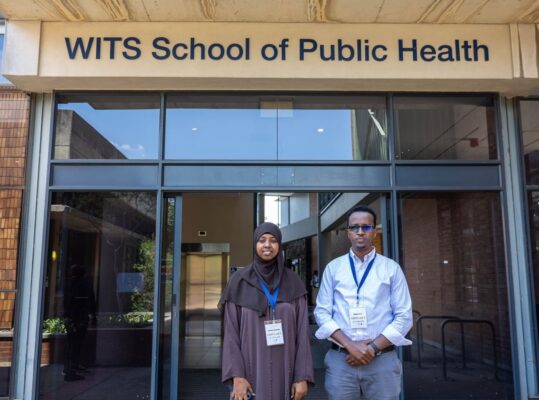
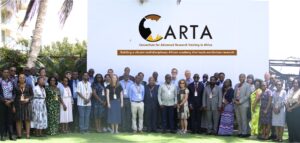
November 2024 marked an exciting new chapter for Amina Hussein and Gallad Hassan, faculty members at the Somali National University (SNU), Somalia. The two were among 20 fellows awarded PhD fellowships as part of CARTA’s Cohort 11, joining a vibrant network of early-career researchers across Africa. Their fellowships are supported through a collaboration with Makerere University, a long-standing CARTA partner in Uganda, which provides mentorship and institutional guidance to SNU.
Somalia is steadily rebuilding its higher education ecosystem after decades of conflict and political instability that weakened nearly every sector and public institution. The prolonged fragility disrupted universities, depleted academic staff, and created significant gaps in research capacity. As the country works to restore its social and health systems, strengthening higher education has become central to rebuilding the knowledge base required for effective governance, service delivery, and long-term development. Initiatives like CARTA provide a critical pathway for emerging scholars to acquire advanced research skills within supportive, continent-wide networks. Through their inclusion in CARTA, the SNU fellows are now part of a wide network of peers and senior faculty as they embark on their PhD journey. Besides, their supervisors are also trained under CARTA’s supervisor workshops.
Research that Impacts Lives
By supporting researchers like Amina and Gallad, CARTA is helping build the local expertise needed to generate evidence that can inform policy and guide long-term development and strengthen institutional resilience. Their current projects are the result of their own lived experiences and professional expertise, and focus on problems that they have identified in their context.
In an environment where maternal and neonatal mortality remain high, and hospitals operate under significant resource constraints, Amina’s research focuses on kangaroo mother care (KMC) and its effects on mother-baby bonding and satisfaction with newborn care in Somali hospitals. Her work explores practical, low-cost interventions that can improve health outcomes. By capturing mothers’ experiences and evaluating the implementation of KMC, her research aims to inform hospital policies, guide staff training programs, and support community health initiatives that encourage continued care after discharge.
In Somalia, fragmented reporting and limited infrastructure often delay timely public health responses. Gallad’s research focuses on integrating community-based disease surveillance with health facility systems to strengthen early detection and response to outbreaks. His work seeks to connect community-level data with formal health systems, improve outbreak preparedness, and support evidence-based public health decision-making at both local and national levels.
While the journey has just begun, the potential is significant. The two fellowships set a precedent that SNU and other Somali universities can follow. They lay the foundation for a future where more Somali academics are trained in Africa while doing research in their own home country, contributing to rebuilding research culture, and creating a pipeline of researchers who can address Somalia’s development priorities from within.
Growing Through CARTA’s PhD Training
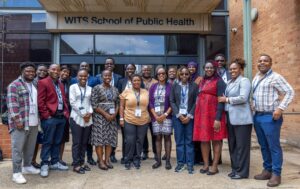
Amina and Gallad are already making headway in their doctoral journey, benefiting from CARTA’s PhD training model – the Joint Advanced Seminar (JASeS). A series of four structured, milestone-based seminars, JASes are offered sequentially to CARTA PhD fellows at different stages of their doctoral journey. They are designed to equip early-career researchers with critical skills, including research methodologies, scholarly writing, grant writing, data analysis, and research ethics. These seminars ensure that fellows progress in a timely manner while conducting high-quality context-specific research relevant to Africa’s challenges.
As part of their training, the fellows recently took part in the University of the Witwatersrand (Wits) School of Public Health Biennial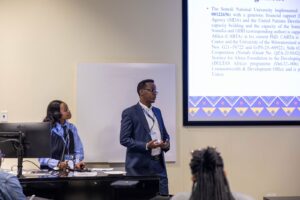 Research Day on November 6, 2025, during JAS‑2 at Wits, South Africa. At the research day, Gallad was one of the CARTA fellows who presented insights from his previous research on the effect of climate change on Somali women’s mental health, highlighting the societal relevance of his work and receiving feedback from peers and experts across the continent.
Reflecting on his JAS experiences, Gallad notes, “Through the JASes, I learn how to connect community data with formal health systems. The skills in stakeholder engagement, policy communication, and evidence translation are directly shaping how I approach my research.”
Looking to the Future of Research in Somalia and Beyond
The inclusion of the Somali National University in CARTA’s Cohort 11 opens pathways for emerging scholars to gain advanced skills, build professional networks, and conduct locally relevant research that can inform policy, strengthen institutions, and contribute to long-term development.
While Amina and Gallad’s journeys are only beginning, this partnership signals a broader aspiration: to ensure that universities in fragile contexts are not left behind as Africa’s research ecosystem evolves. By expanding opportunities to institutions like SNU, CARTA is helping lay the groundwork for a future where more researchers across the continent can participate fully in knowledge generation. As CARTA continues to strengthen its footprint across the region, this work represents a step toward a more inclusive, resilient, and representative African research landscape.


No Comments