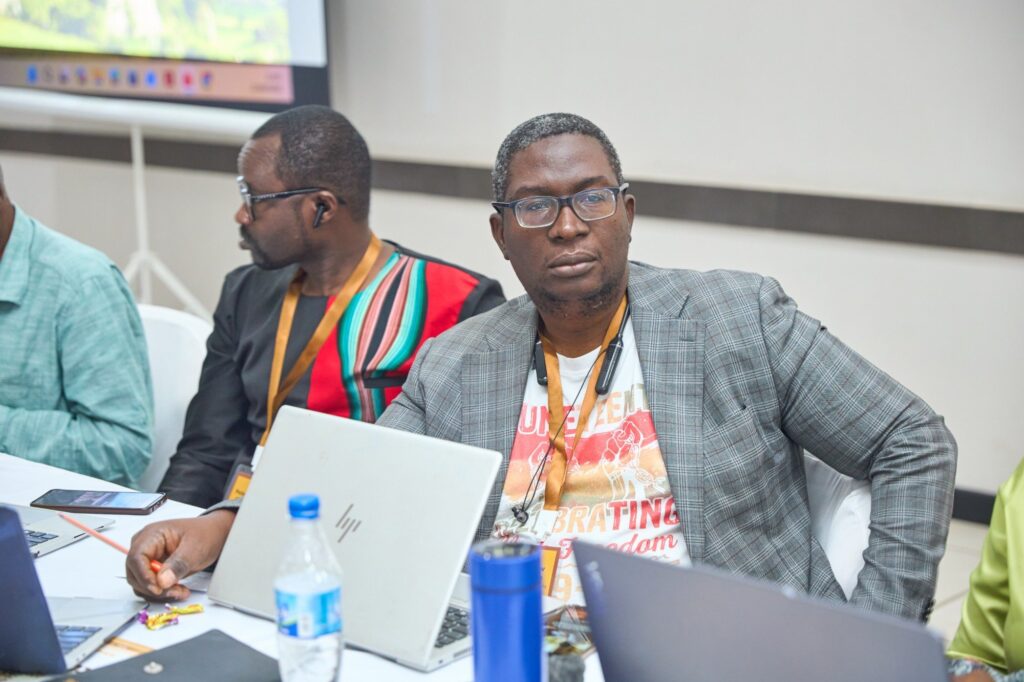
When Andrew Tamale joined CARTA as a young academic at Makerere University, Uganda, his primary ambition was to earn a PhD and build a career in academia. His experience as a CARTA fellow, however, broadened his perspective on what doctoral training could unlock. For him, a PhD became more than an academic qualification; it became a foundation for contributing to institutions, influencing policy, strengthening health systems, and creating opportunities for others.
“One of the things CARTA made us realize is that a PhD is just the beginning. It is not the destination.”
That philosophy has become a defining feature of Andrew’s career. Today, he is not only a researcher but also an educator, policy contributor, mentor, and systems builder whose work has influenced doctoral training, food safety policy, and outbreak preparedness in Uganda and beyond.
Transforming How PhDs Are Trained
Through his work as an educator, Andrew has found a powerful way to turn his CARTA experience into meaningful impact. Drawing on the skills, approaches, and philosophy gained through the fellowship, he is actively involved in strengthening doctoral training at Makerere University.
Working with CARTA focal persons and the Directorate of Graduate Training, Andrew helped reshape the PhD program at Makerere into a more structured, well-coordinated doctoral training framework from what was previously a largely unstructured process. The reforms have introduced clearer timelines, cross-cutting courses, and more coordinated supervision, alongside courses in areas such as scholarly writing, philosophy of methods, and research approaches, many of which were informed by CARTA’s training model. The changes addressed some of the challenges that had previously slowed students’ progress.
“Students no longer struggle wondering when they will take graduate courses. The program is now structured from the beginning,” he explains.
These reforms are helping students navigate their programs more effectively and have reduced delays associated with completing mandatory research courses. For Andrew, this is what meaningful research capacity strengthening looks like: not simply training individuals, but changing the systems in which they learn and work.
Turning Research into Safer Choices for Communities
Andrew’s impact extends beyond the university. As a public health veterinarian, he has applied his research expertise to issues that directly affect communities, including food safety and public health policy. His CARTA-supported PhD research examined food safety risks associated with fish consumption among communities living around Lake Albert during Uganda’s oil exploration period. Concerns about contamination grew after oil companies declined to purchase locally produced food, leaving communities uncertain whether the fish they depended on was safe to eat.
By conducting one of Africa’s pioneering fish-consumption advisory studies, he examined dietary exposure to toxic heavy metals such as mercury and lead. These findings provided local communities with a clearer, more nuanced insight into the associated health risks.
Larger fish were found to accumulate higher concentrations of toxic metals over time, while smaller fish presented lower risks. The research also identified safer portions and consumption practices for vulnerable groups, including pregnant women and children.
Importantly, the evidence did not remain confined to academic publications. It informed dietary guidance shared through local government structures and helped communities adapt how they prepared and consumed fish. Rather than abandoning an important source of nutrition and livelihood, communities could make more informed choices to reduce potential exposure. This is the kind of impact Andrew believes research should deliver.
Strengthening Africa’s Capacity to Respond to Health Emergencies
Andrew’s systems-building approach is also evident in his contribution to global health security. For more than a decade, he has supported the training of multidisciplinary One Health teams in Uganda, bringing together professionals from medicine, veterinary science, engineering, law, environmental sciences, and community settings to respond collectively to health threats.
This approach has strengthened Uganda’s capacity to prepare for and respond to outbreaks, including Ebola. More importantly, Uganda has increasingly shared the expertise developed within its borders, with Ugandan teams supporting outbreak preparedness and response efforts in countries including Ghana, Nigeria, and Ethiopia. His work has also contributed to broader continental efforts to institutionalize One Health training and collaboration, including the development of the Afro One Health University Network. Through such initiatives, the impact of his work continues to extend beyond individual institutions and national boundaries.
Building Systems That Outlast Individuals
Across Andrew’s career, a common thread emerges: building lasting capacity. Whether strengthening doctoral training at Makerere University, generating evidence to inform food safety practices, contributing to national health policies, or preparing multidisciplinary teams to respond to disease outbreaks, his work reflects a commitment to creating systems that enable others to succeed.
For Andrew, this means ensuring that the knowledge and skills developed through research training do not remain with individual fellows. They must be transferred, institutionalized, and applied to address challenges facing communities and countries across the continent.
“The clapping comes later,” he says, likening his PhD journey to climbing a mountain. “First you climb alone. But as you come down, the recognition, the impact, and the opportunities begin to grow.”
Andrew’s journey offers a glimpse of the multiplier effect that research capacity strengthening can create. What began as one young academic’s pursuit of a PhD has evolved into contributions to doctoral education, public health policy, community practice, outbreak preparedness, and continental research collaboration. His story demonstrates that the true measure of a research fellowship is not only the number of degrees awarded or publications produced, but what happens when fellows take what they have learned and use it to strengthen institutions, influence systems, solve real-world problems, and create pathways for others to follow.